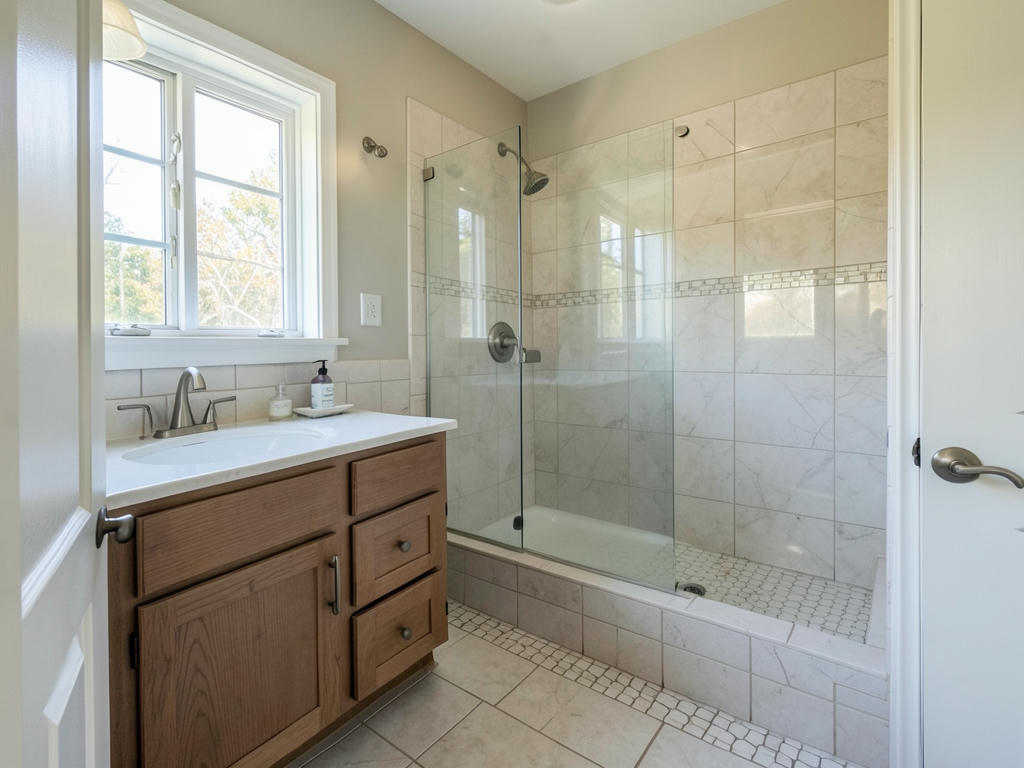
Home/Bathroom Remodeling/Bathroom Tile Installation
Go2you Construction LLC
Bathroom tile installation in Clarksville, TN
Plan the surface beneath the finish
Bathroom tile installation in Clarksville, TN starts with a sound surface, not just a tile selection. We help you consider floors, walls, wet areas, and adjoining finishes so your tile project fits the way you use your bathroom.
When should bathroom tile be replaced?
Loose tile, recurring grout cracks, and soft areas underfoot call for a closer look at what supports the finish. A cracked tile can result from an isolated impact, but repeated cracking may point to movement beneath it. Darkened grout alone does not prove a leak; moisture, cleaning residue, and wear can look similar. Before choosing replacement tile, identify where the trouble starts and how far it extends. Covering a damaged surface without addressing the cause can leave the same problem underneath a new finish.
Tile replacement can also address a floor that's difficult to clean, awkward transitions, or a wall finish that no longer suits the room. Tell us which concerns are functional and which are visual. If the project extends beyond tile into fixtures or room layout, our bathroom remodeling services cover those broader updates. Keeping the tile scope clear matters: replacing a floor while retaining the vanity is different from tiling an empty room, and a shower wall needs a different assembly than a dry wall outside the bathing area.
How is bathroom tile installed?
A typical tile installation starts with removing materials as needed and checking the exposed base for damage, movement, and unevenness. Tile needs a stable substrate with flatness appropriate to the selected tile size. Depending on the assembly, preparation may involve subfloor repairs, an approved underlayment, patching, or a compatible membrane. Cement board is not a substitute for structural strength, and tile adhesive is not intended to correct every uneven floor. These distinctions matter because the finished surface depends on the layers you cannot see once installation is complete.
Layout comes before setting. Reference lines establish where full tiles, cuts, grout joints, and edge details will fall, helping avoid narrow strips at visible edges. The setting mortar must suit both the tile and substrate, with coverage appropriate to the application. After the tile has set sufficiently, grout fills the joints, while changes of plane generally require a suitable flexible sealant rather than rigid grout. Cleanup follows, but the room is not necessarily ready for water or traffic immediately. Product instructions determine the required curing periods between stages and before use.
Which tile works best in a bathroom?
The right bathroom tile depends on its location, water exposure, maintenance needs, and the surface beneath it. Porcelain is often chosen for floors because of its low water absorption, while some ceramic tiles are intended only for walls. Check the manufacturer's stated use rather than assuming every tile suits every surface. For floors, consider wet-use suitability and texture, not appearance alone. A polished finish may feel different under wet feet than a textured one. Bring samples into the bathroom and view them under the lighting you actually use.
Tile size changes both the appearance and the preparation requirements. Large-format pieces can create fewer grout lines but require a flatter base and careful handling. Small mosaics can follow a properly formed shower slope more readily, although they introduce more joints to clean. Natural stone may need sealing and stone-compatible cleaning products; some stone is sensitive to acids. Grout color also affects how visible joints and everyday residue appear. Ask about the complete combination of tile, grout, edge trim, and maintenance before making selections, rather than choosing each item separately.
What changes the scope of bathroom tile installation in Clarksville?
Surface condition and installation details usually affect the scope more than square footage alone. Removing tile from a solid base is different from rebuilding a water-damaged floor. Multiple flooring layers, uneven substrates, tight corners, decorative patterns, niches, and numerous fixture cutouts add work. Larger tile may require more flattening, while intricate mosaics require more alignment and joint cleanup. Changes in finished floor height also deserve attention at the doorway, around the toilet flange, and beneath door clearances. These connections should be considered before selecting the final assembly thickness.
Shower tile introduces water-management details that ordinary dry-area tile does not. Tile and grout are not a waterproofing system by themselves; the underlying assembly must manage water at corners, penetrations, and the drain connection. Shower floors also need an appropriate slope without low spots that hold water. If your plans include shower remodeling, discuss the waterproofing method and tile layout together. For a bathroom floor that meets other tiled rooms, coordinating with tile flooring installation can help you think through transitions, elevation changes, and where one installation should stop.
How should you prepare for bathroom tile work?
Preparation starts with clearing the bathroom and deciding how you will manage without the affected fixtures. Remove toiletries, rugs, wall decorations near the work, and stored items that could collect dust. Discuss access, material storage, nearby furniture protection, and which fixtures must be removed before work starts. If this is your only bathroom, raise that issue early rather than assuming the toilet or shower will remain usable throughout. Photos, approximate dimensions, and pictures of cracked or loose areas are useful starting points when you contact us about bathroom tile installation in Clarksville.
The schedule needs room for preparation and curing as well as tile setting. Demolition and substrate work can occupy separate stages, especially when concealed damage is uncovered. Mortar, waterproofing materials, grout, and sealants each have product-specific waiting periods; cooler conditions or limited ventilation may affect some drying times. Ask when walking, fixture reinstallation, cleaning, and shower use are appropriate for the selected products. Before work begins, also settle tile orientation, grout color, edge profiles, and spare-tile needs. Having those decisions and materials ready reduces avoidable interruptions after surfaces have been opened.
Call (931) 220-4607 to discuss your tile project
Talk with us about your Clarksville bathroom tile
Call • (931) 220-4607Questions
Questions to ask before replacing bathroom tile
What is a realistic budget for a bathroom remodel?
A realistic budget depends on the scope, existing conditions, and materials rather than a single standard amount. For tile work, separate demolition, substrate repair, waterproofing, tile selection, and fixture removal in your planning. Keep room for concealed damage, and distinguish a tile-only update from a remodel that changes plumbing locations or the room's layout.
Can new bathroom tile go over existing tile?
New tile can sometimes go over existing tile, but only when the existing assembly and the chosen installation system are suitable. Loose tiles, moisture problems, movement, or poor bonding need investigation first. Added height can also interfere with doors, transitions, and fixtures. Installing over old tile should not be treated as a shortcut around necessary repairs.
How long before I can use a newly tiled shower?
You can use a newly tiled shower only after all relevant setting materials, grout, and sealants have completed their required cure periods. There is no single waiting time that applies to every product combination. Ask for the return-to-use instructions for your specific assembly, and do not assume dry-looking grout means the shower is ready.
What should I compare when searching for bathroom tile installation near me?
Compare the proposed preparation, waterproofing, material specifications, and finishing details, not just the visible tile. Ask what happens if removal exposes damage, which surfaces are included, and how transitions will be handled. For wet areas, ask how the waterproofing connects at corners and penetrations and what maintenance the selected grout and sealants require.